
How does one learn to draw?
(Written on October 3, 2023 on my Substack, Bird’s Nest)
How do you learn to draw?
To draw is to put what you see with your eyes (or your mind’s eye!) onto paper or any other surface.
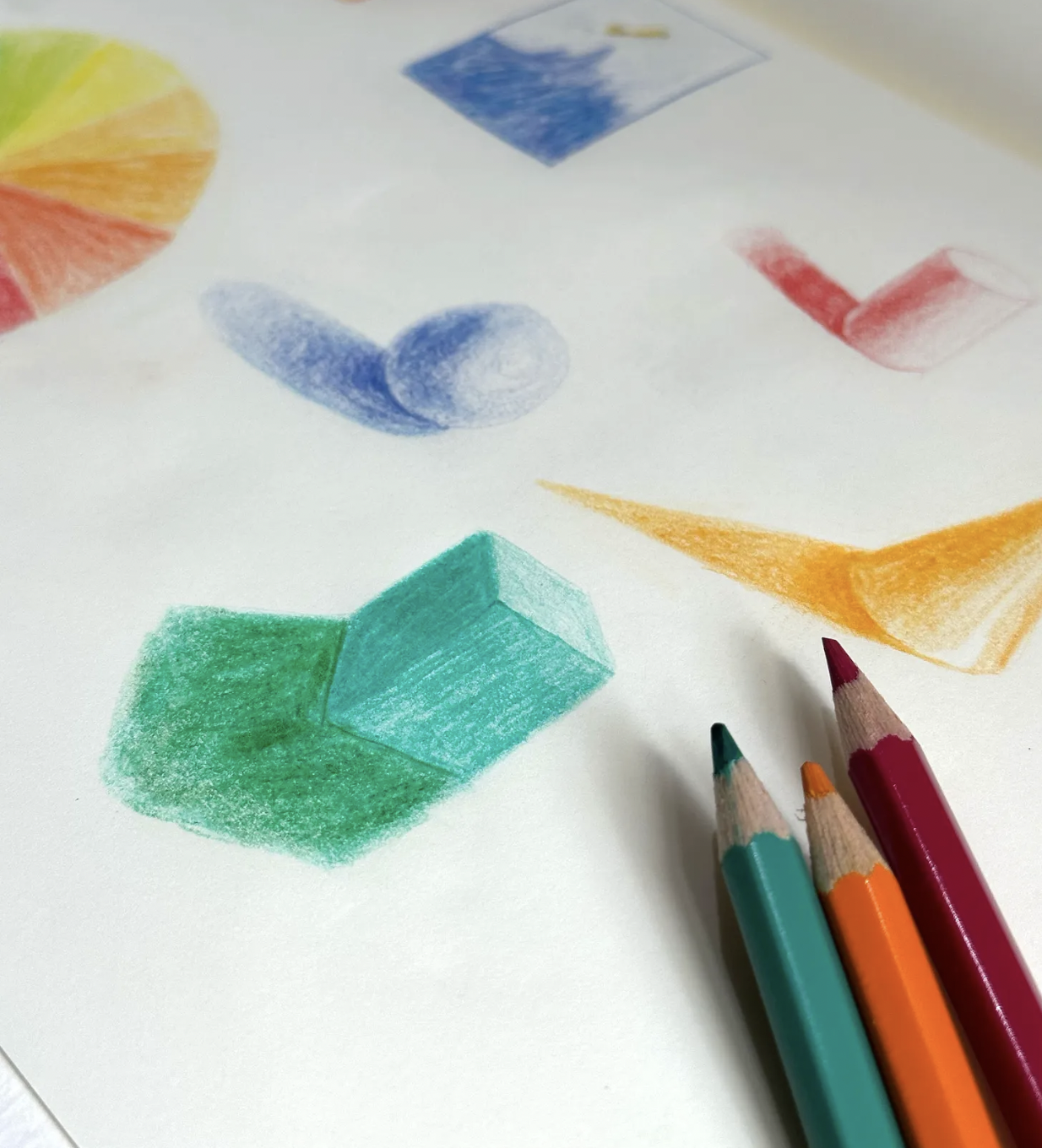
I pondered about this question over and over, because I was invited to facilitate a drawing workshop for kids aged 8–12!
So I had to reframe my question to ‘How do you teach kids how to draw?’
Last September 24, I got to teach the most amazing group of students during the Basic Drawing Workshop (inspired by Juan Luna’s once lost painting called ‘Hymen, oh Hymenée) at the Ayala Museum.
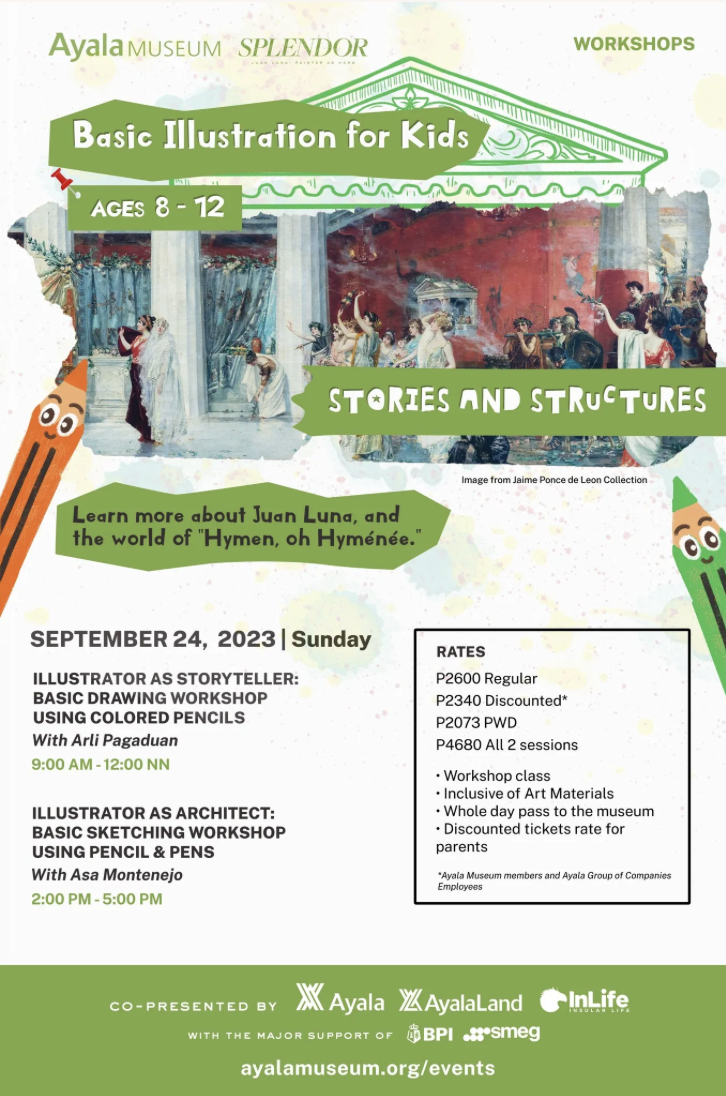
Poster Courtesy of Ayala Museum
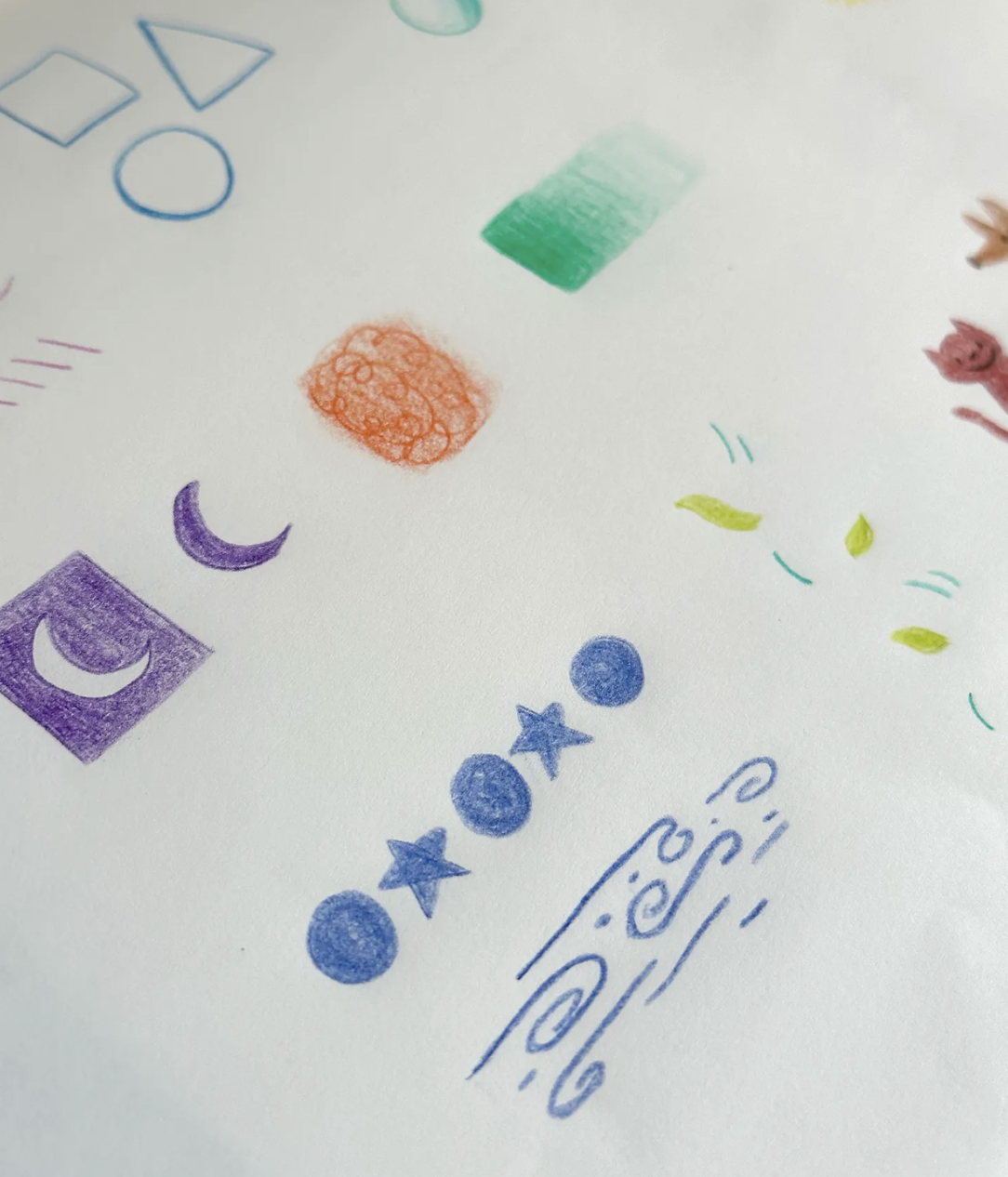
Part of the preparation was to create reference sheets which consisted of the Elements of Art, Principles of Design, the Color Wheel, Composition, Basic Emotions, and the Line of Action.
Also, I picked out the bride and a bit of the background to study. I needed to learn the painting first before I could teach the kids!
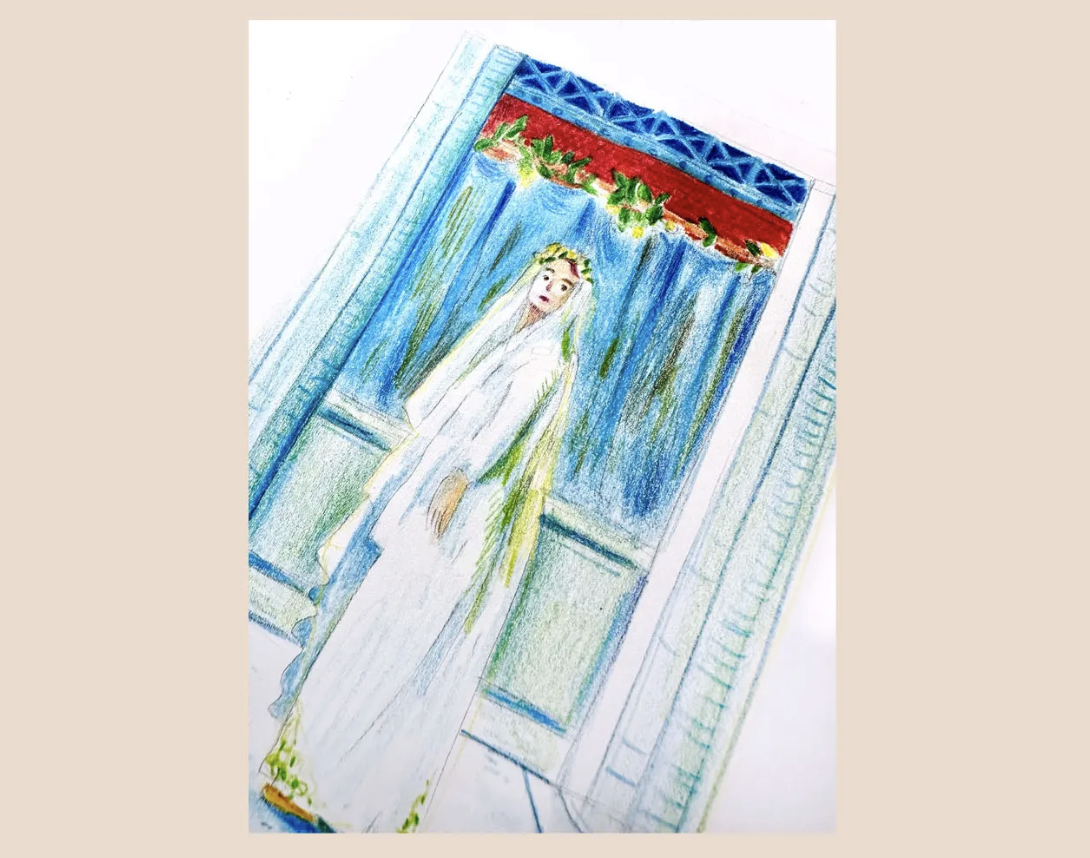
I aimed for the kids to know and understand the foundations first, so I made sure my teaching approach—while we observed Juan Luna’s painting—consisted of questions like the following: “What shapes do you see? How long do you think the distance is from this pillar to the next? Where is the light coming from? This part is in shadow, so the light is from this area.”
At the beginning of the workshop, I mentioned that I didn't want to teach them how to draw; rather, to think and see as an artist.
Kids are highly observant. We all have been when we were young, because everything is new to our eyes! I wanted the students to nurture this skill and to keep noticing the smallest details and how everything connects in an artwork.
Once they see and get familiarized with the shapes, the colors, the light, the space, the lines, and the textures, then they will be able to draw. :-)
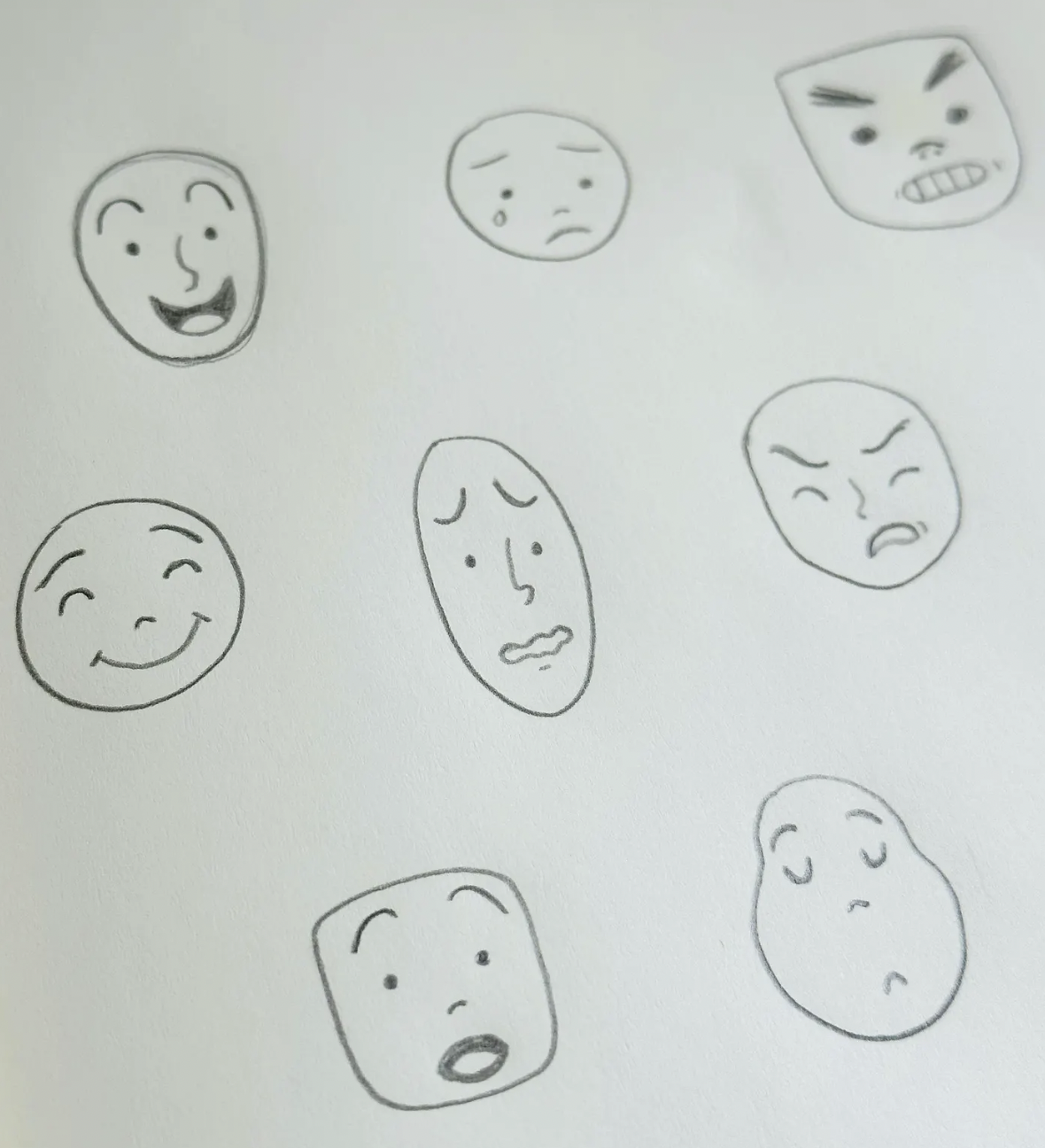
Because, to draw is to see.
And from there, when they build up their visual library of sorts, they can begin drawing from imagination—from the mind’s eye—next time.
Back in elementary school and high school, I watched the anime Cardcaptor Sakura. Like many others, I was enamored with the costumes that Tomoyo, her best friend, would make for Sakura.
It was copying the illustrations that trained my eye to observe. Of course, to do so must only be for practice (and if we were to share it with others, we must cite our references and also say that it is only a copy).
Another way I learned to draw was reading picture books as a child. From there, I would make my own stories and illustrations from my imagination.
Additionally, I would draw on my journal about how my day went.
In recent years, I would Google some of Leonardo Da Vinci’s anatomy drawings, and I would make studies of them, so I can learn how to see the human body and how everything is connected.
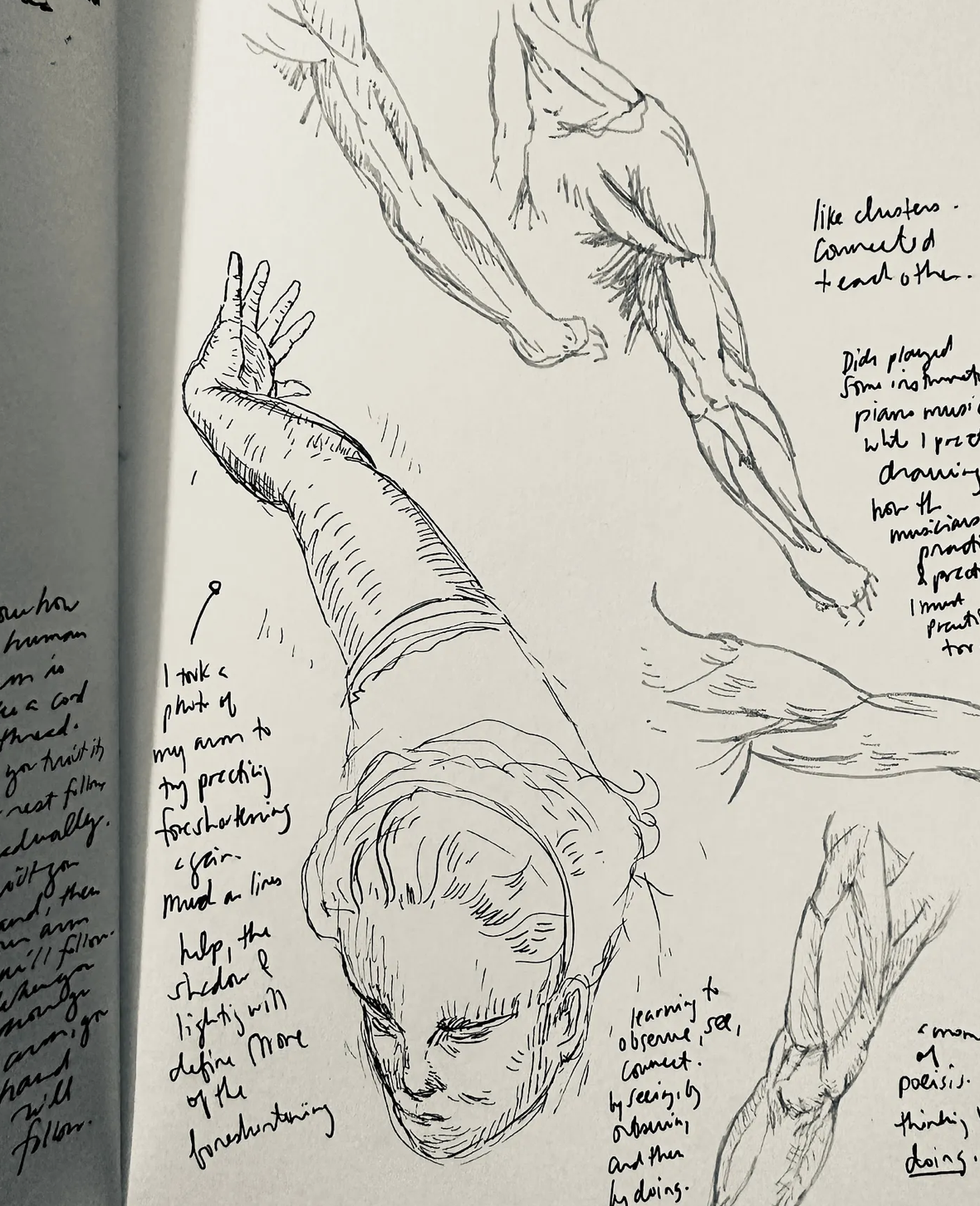
Arms and leg drawings based on Da Vinci’s anatomical drawings; the one with the face and outstretched arm was based on a photo I took of my arm, haha!
Drawing, like writing, is something we can all learn and would want to keep in our tool kit of communication skills and expressive arts needs. It can be a livelihood for some (like me!), but it is for everyone to try and hopefully find enjoyment and comfort in.
I’ve met people throughout the years, and I have friends, too, who would tell me that they can’t draw. And I get the frustration…The way how I drew before when I was still a child was nowhere near how I draw now!
I also feel sad…
Maybe someone told them they couldn’t draw, someone discouraged them, or the way that art was taught to them was like this: ‘Well, if you're going to make art, you have to be good like [insert name of famous painter here]!’
If art was that impossibly ambitious, no one—even I—wouldn’t dare to try.
It’s important that we let ourselves inside the beginner’s space and to have fun!
My friend, we all can draw! When you create a line on a piece of paper, add a few dots, form a star and shade it in, that is a drawing! It is a visual form of expression.
(Next time, I’ll write something about the expressive arts!)
And if we want to have a career in illustrating, this is when more practice is required, and that is great!
Drawing can be learned, and it can be practiced over time.
This is why when you watch artists draw from a still object in front of them, you would see that their eyes would dart back and forth, trying to see over and over that what they are drawing is close to what they are observing.
There must be repetition to be able to improve, and it might get disheartening at times, but don’t worry: it will all add up in the end! Be kind and patient with your own growth.
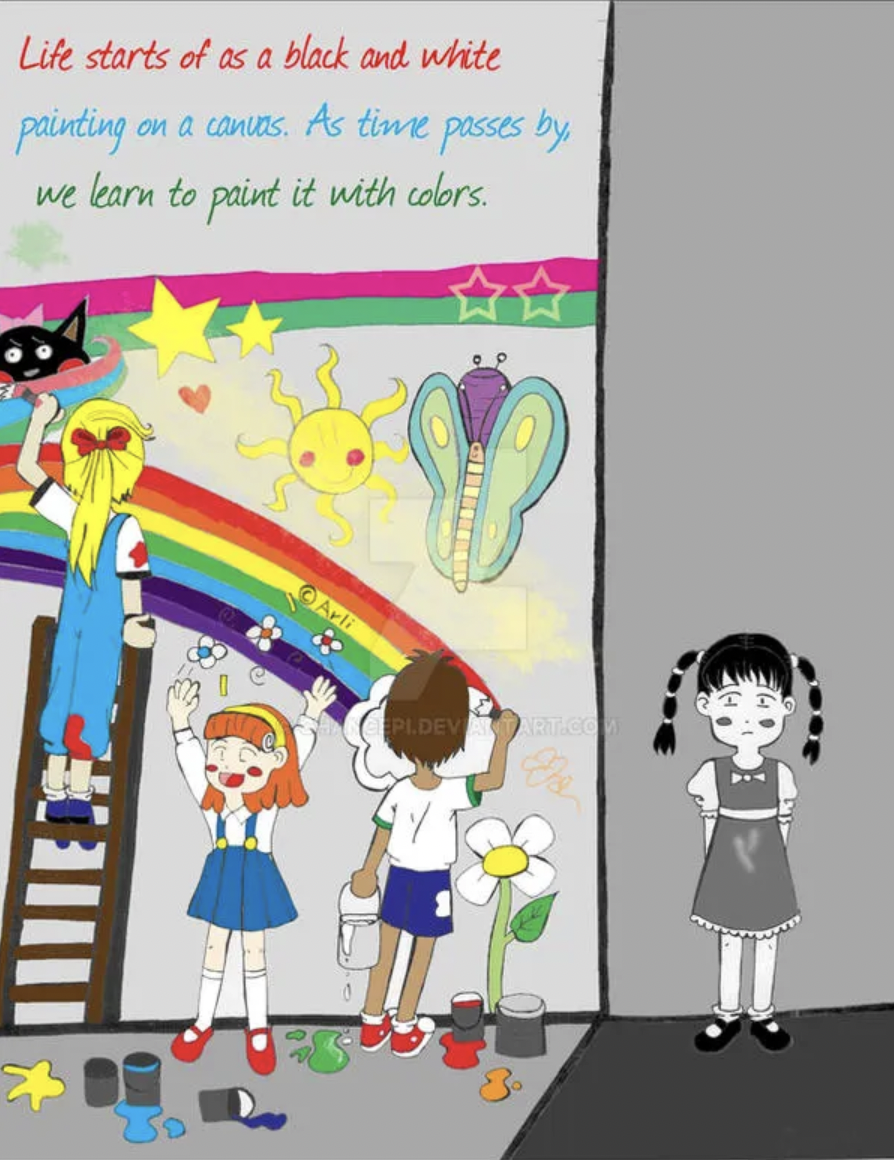
One of my old drawings way back in 2007 (I was about to start third year high school!) when I started learning how to use Adobe Photoshop
Imagine the joy you would feel when you compare an artwork you made when you were in elementary school to an artwork you make years after!
A few weeks ago, my cousin challenged me to recreate one of my old illustrations.
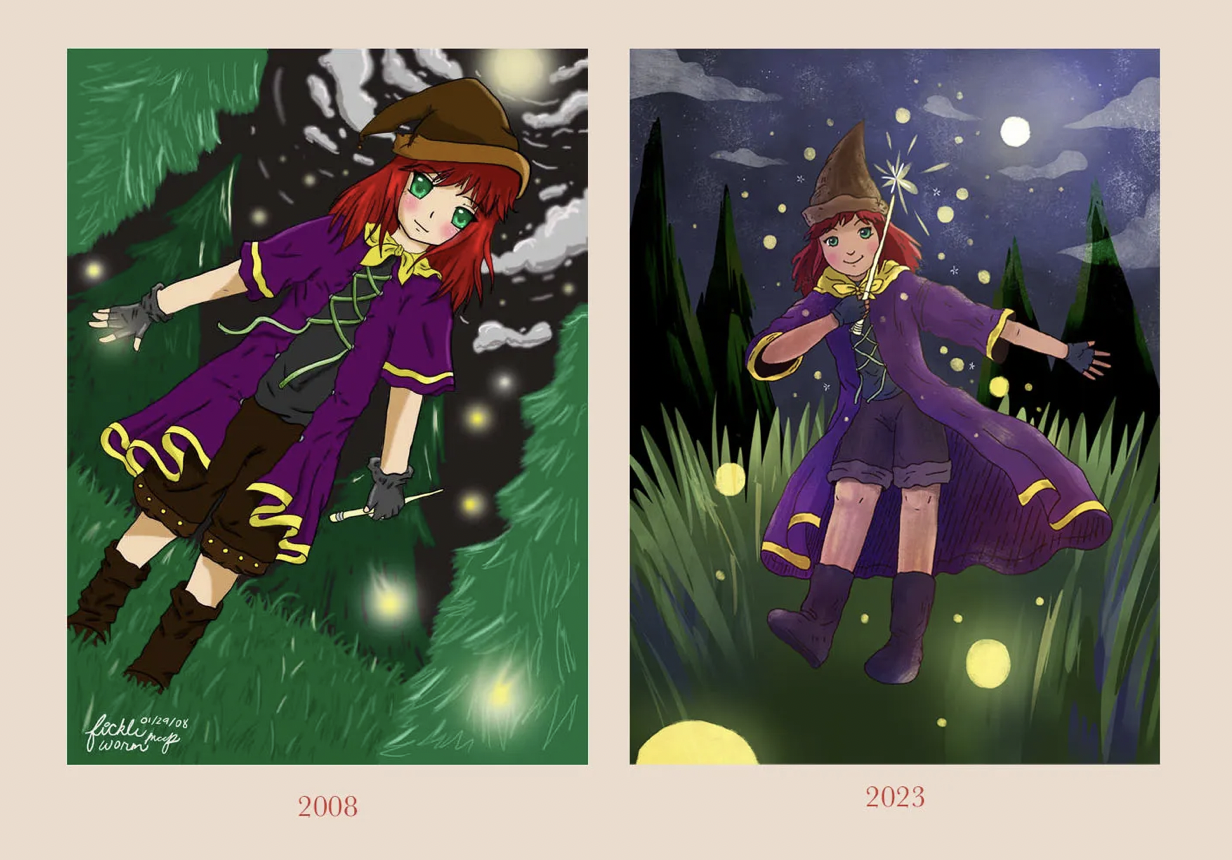
This all happened, because I had opened up to him that I felt sad that I haven’t been improving at all in drawing.
But because of his challenge and encouragement, I was able to look back and appreciate my growth in drawing.
And in seeing.
And in letting people believe in you…
…So you could learn to believe in yourself, too.